

ISO 14001: Environmental Management System and Environmental Compliance | URS Jordan
- The international standard ISO 14001 is a key framework for governing an organization’s environmental performance. This standard is not presented as a formal obligation only, but as a strategic management framework that enables companies to align their operational processes with sustainability requirements and compliance with local and international environmental laws and regulations.
- Leading organizations view ISO 14001 as an investment tool for reducing costs and improving resource consumption efficiency, rather than merely a file prepared for annual audit purposes.
What Is an Environmental Management System (EMS) and Why Does an Organization Need It?
- ISO 14001 is an Environmental Management System (EMS) designed to structure how an organization manages the environmental aspects resulting from its activities, products, and services. The operational and business value of this system can be viewed through three main areas:
- Regulatory compliance and risk reduction: Supporting organizations in monitoring and managing environmental and legal obligations on an ongoing basis to reduce exposure to regulatory issues and nonconformities.
- Business and market positioning (B2B market leverage): Demonstrating environmental capability can support participation requirements for government tenders, major projects, and supply chain expectations within larger organizations and international business environments.
- Operational efficiency and cost reduction: Reducing waste in raw materials, improving waste management practices such as recycling and treatment, and optimizing energy and water consumption, which may contribute to lower operational costs and more efficient resource utilization.
Key Foundations and Concepts of ISO 14001
The system is built around the PDCA methodology (Plan – Do – Check – Act) to support continual improvement. Its effectiveness is largely based on two core concepts:
1. Environmental Aspects and Impacts (Aspects & Impacts)
Environmental Aspect: An element arising from an organization’s activities that interacts with the environment, such as gas emissions, industrial discharge, fuel consumption, noise, or hazardous waste generation.
Environmental Impact: The actual environmental change resulting from that aspect, such as air pollution, soil contamination, or depletion of natural resources.
Operational objective: Identifying and evaluating these aspects to determine significant environmental issues and establish appropriate engineering and administrative controls to manage them.
2. Integrating Environmental Responsibility into Organizational Culture
The standard shifts environmental responsibility from being limited to an HSE function into an integrated part of top management decisions, procurement activities, maintenance processes, and daily operational practices.
Implementation Considerations: Is the Standard Suitable for Your Organization?
- ISO 14001 offers a high level of flexibility, making it applicable across different sectors and organization sizes within the Jordanian market, while the scope and environmental aspects may vary according to operational activities:
- Industrial and logistics sectors: Focus on managing emissions, chemicals, solid and hazardous waste, and improving production efficiency.
- Service and technology sectors: Focus on governing energy consumption, managing electronic and paper waste, and improving the environmental footprint of administrative facilities and data centers.
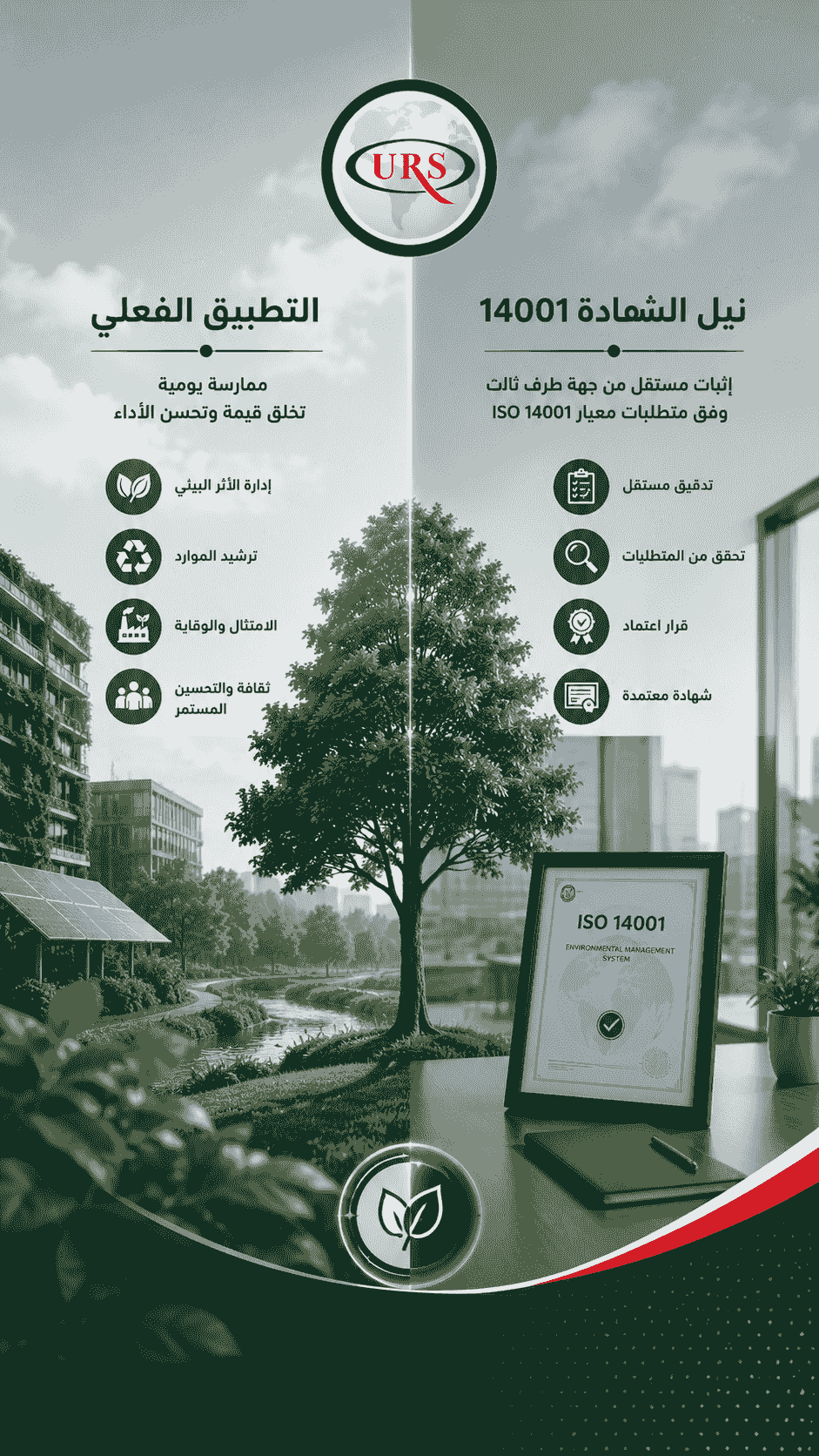
Professional Clarity: The Difference Between Actual Implementation and Obtaining ISO 14001 Certification
- URS Jordan adopts clear language that fully distinguishes between two stages:
- System implementation: The organization’s internal effort to build processes, identify environmental aspects, train personnel, and continually improve its on-site performance.
- Obtaining certification (ISO Certification): An independent assessment pathway conducted by a third-party body to verify that the implemented system conforms to the requirements of the standard. Issuing the certificate is not a prior marketing promise, but a technical decision subject to the availability of accurate on-site evidence and audit integrity.
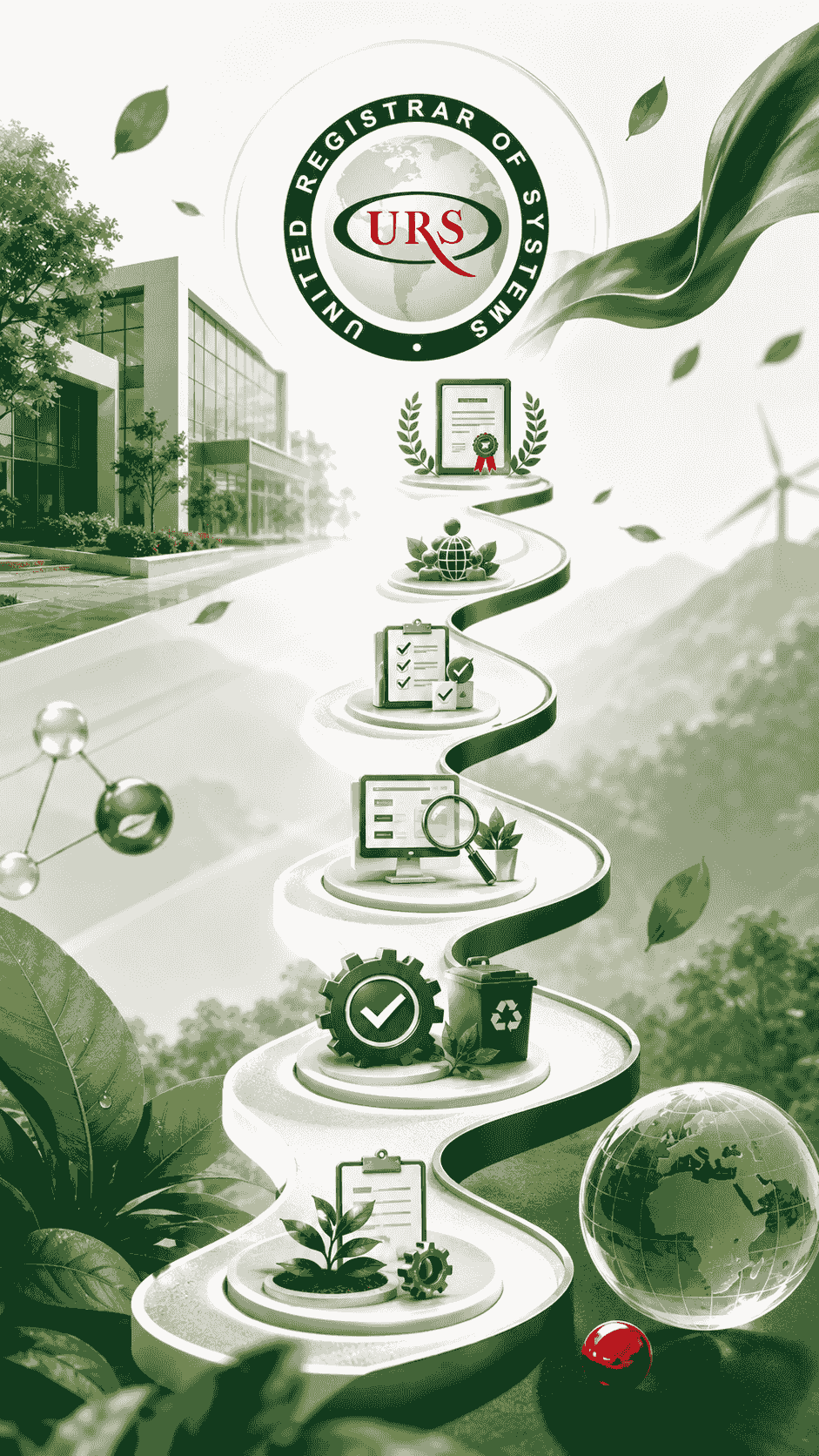
ISO 14001 Certification Pathway Through URS Jordan
As the Local Office of URS Holdings UK in Jordan, we provide environmental management system audit and certification services within a structured and professionally controlled framework. Our implementation steps begin with:
- Application context review: Analyzing initial information related to the organization’s size, number of sites, nature of activities, and outsourced processes.
- Certification scope definition: Establishing clear and precise certification boundaries to support proper governance of the technical assessment.
- Structured quotation preparation: Providing transparent contractual costs based on the requirements of the applicable certification programs, followed by on-site audit stages and certification decisions based on the strength of evidence and professional impartiality.


